All work03 / 07

Own product · Habit & training app

Sojourner

A habit and training app for iPhone, Apple Watch and Android, taken from first commit to a public iPhone beta in 29 days — written in Swift on Linux, without a Mac.

commits in 29 days
478
lines of Swift, built on Linux
59.8k
lines of Kotlin for Android and Wear OS
43.8k
labelled meals in the food benchmark
1,427
From the repo

iPhone public beta · Android in closed testing

Role
Solo — product, design and engineering
For
Independent product
When
Oct 2026 — now
Stack
Swift 6 · SwiftUI · HealthKit · AlarmKit · ActivityKit · WatchConnectivity · Foundation Models · Kotlin · Jetpack Compose · xtool · Cloudflare Workers
Start a project

Building something like this? Tell me about it.
The brief

A companion that won’t let you quit.

A habit and training app where habits are verified, not ticked: an alarm that only stops for a live outdoor photo, training logged from the wrist, and a daily score that keeps the streak honest. iPhone, Apple Watch and Android, built by one person.

Habit apps trust a checkbox, and a checkbox is easy to lie to at 6am. Sojourner makes the consistent choice the easy one and the lazy choice expensive: twelve habits a day, each checked against a photo, Health data or the Watch; rules that lock for the day; and a debrief you have to write after a bad one before the app opens again.

What I built

What I built

  • 01

    An iOS app with no Mac

    Built, signed and installed from Linux with xtool and the Darwin SDK. Signing and App Store upload are scripts in the repo; a hosted Mac is used only for the one step Apple’s tooling won’t do anywhere else.

  • 02

    Verified, not ticked

    The wake-up alarm rings through silent mode and repeats every five minutes until you take a live photo outdoors, checked on the device. Light, sleep and steps come from Health; anything typed in is marked self-reported.

  • 03

    The Watch is a real client

    Gym mode, runs and workout recording on the wrist. Sets travel over WatchConnectivity and merge by ID with receipts, so nothing is lost when the phone is in a locker and nothing is logged twice.

  • 04

    The model proposes, Swift applies

    On-device models read proof photos, meals and plain-English plan edits. They only propose: deterministic Swift applies a change, and only after you confirm it.

What it looks like

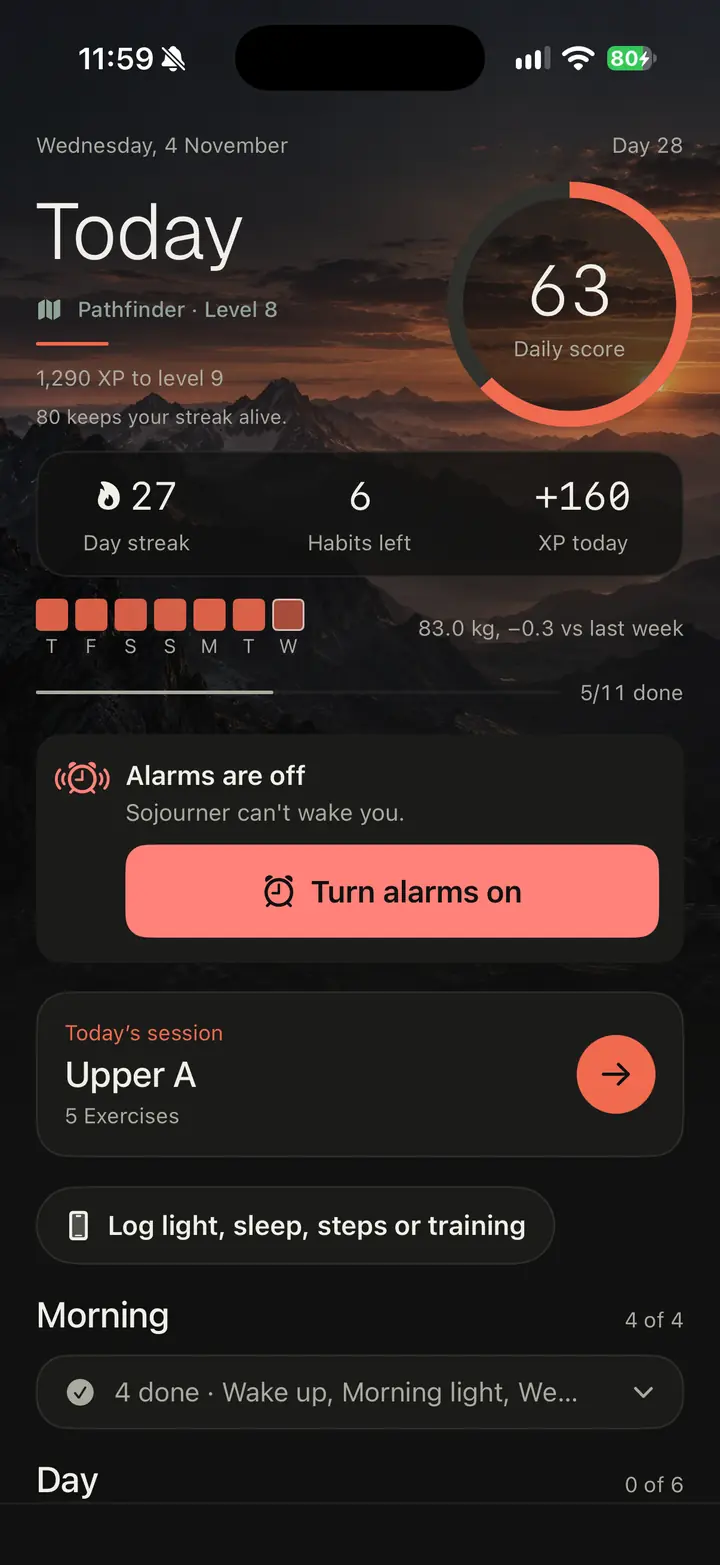
  • Today: the daily score, the streak and the one thing to do next (store screenshot, sample data)

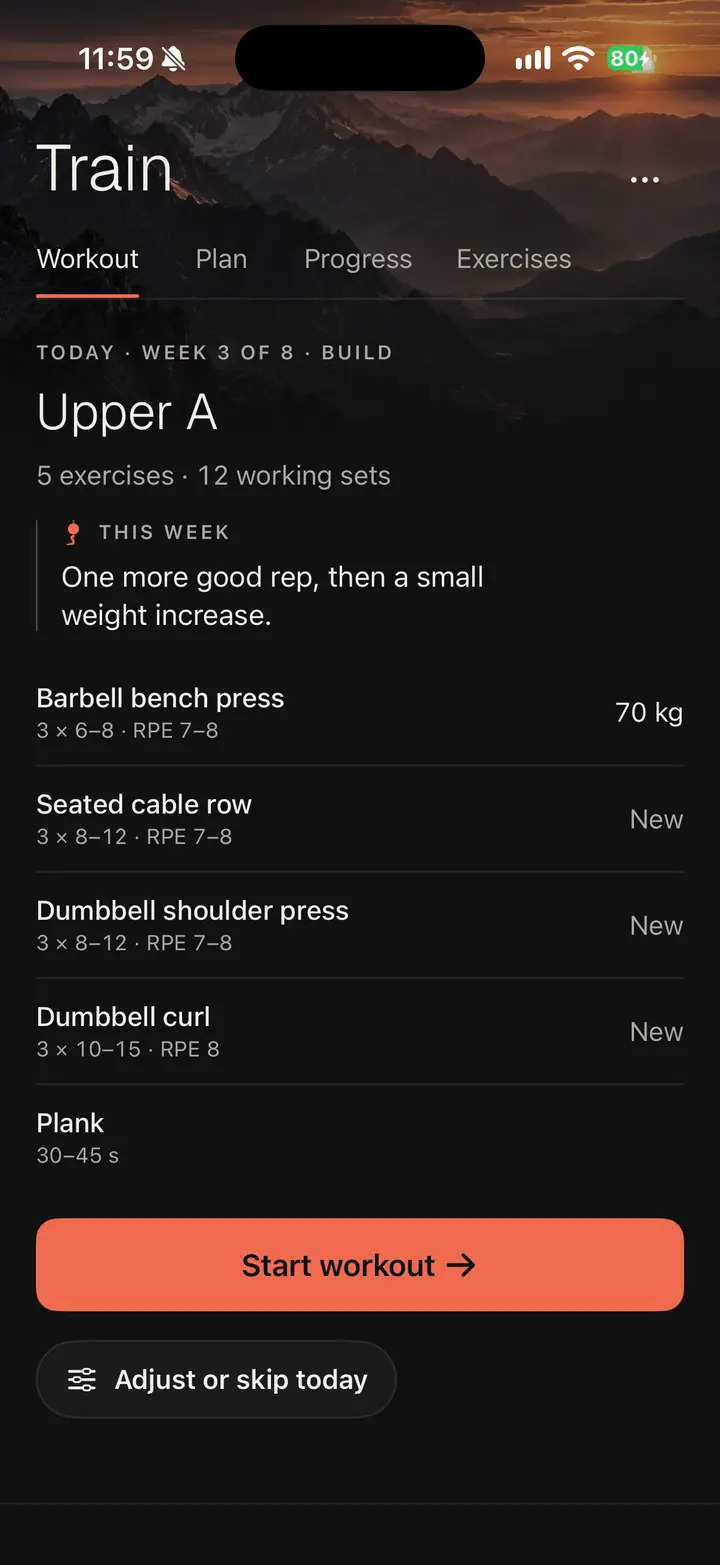
  • Train: today’s session, Upper A, five exercises and twelve working sets

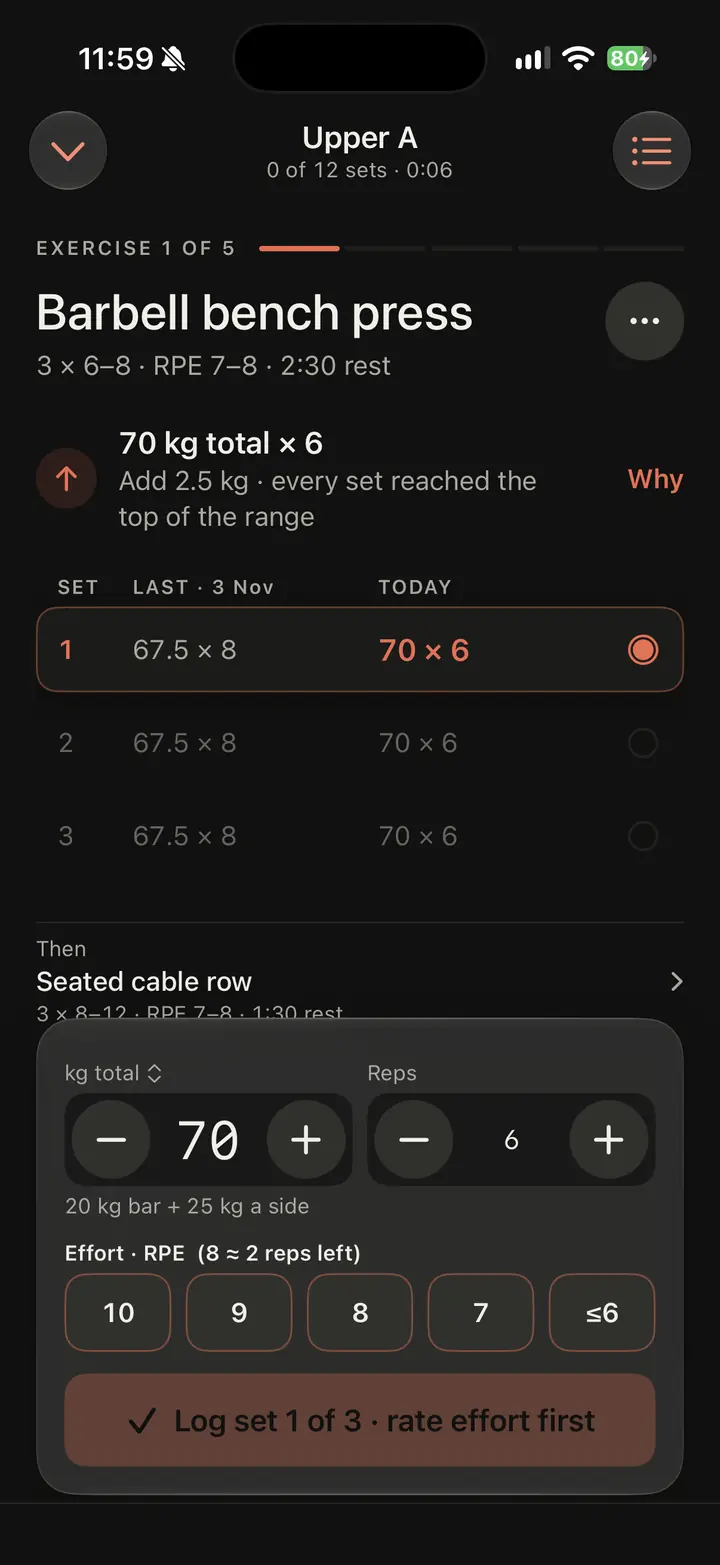
  • Gym mode: add 2.5 kg because every set reached the top of the range, with a Why link

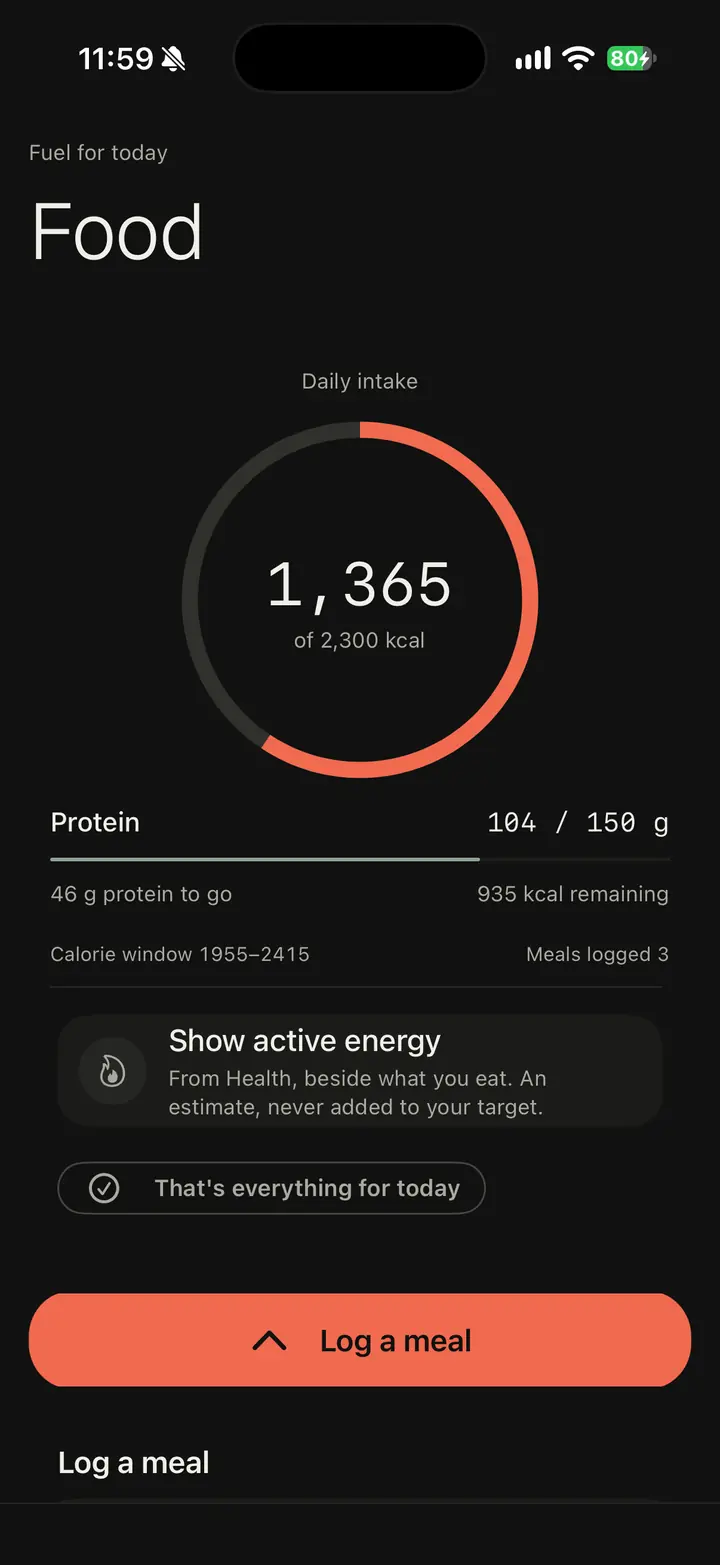
  • Food: 1,365 of 2,300 kcal and protein progress for the day

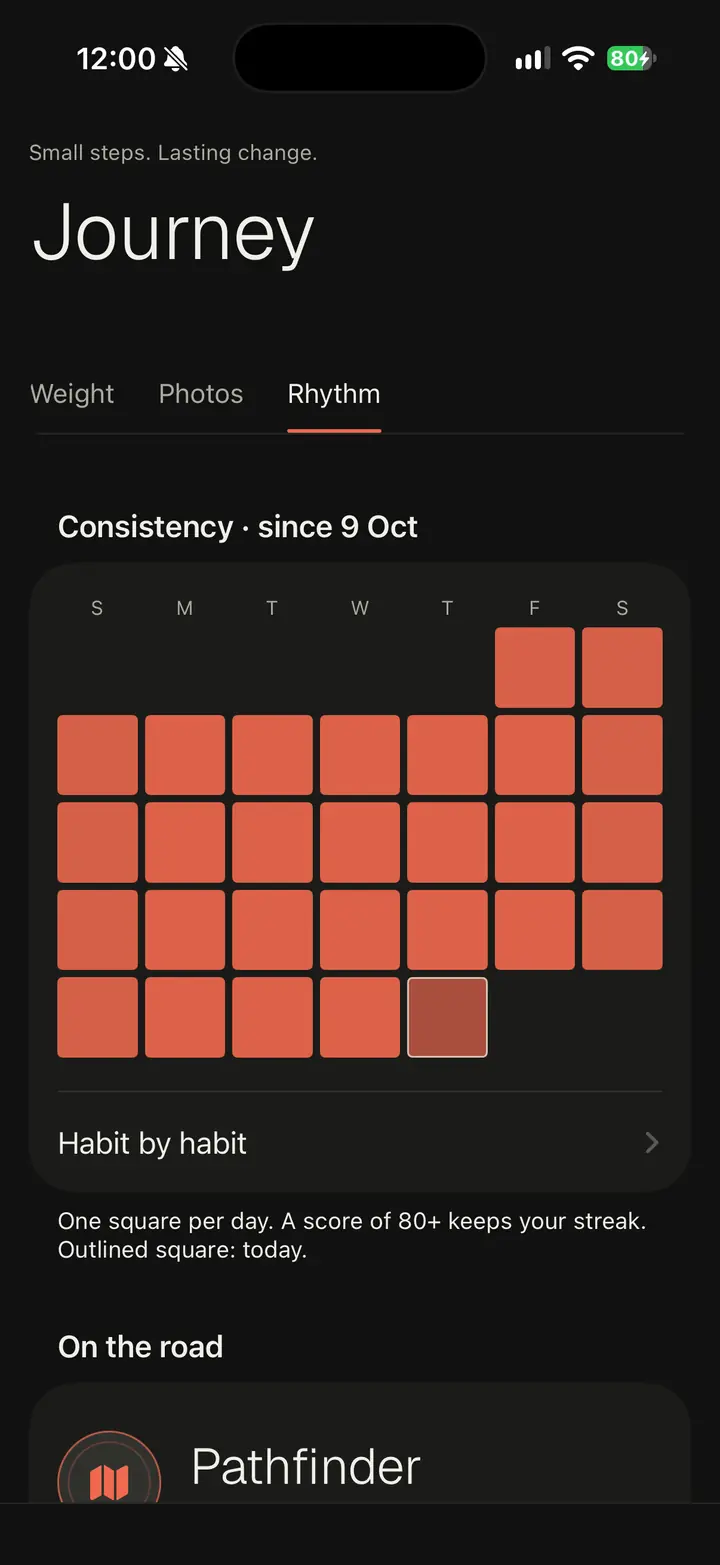
  • Journey: a consistency heatmap where a score of 80 or more keeps the streak

The phone and Watch that wouldn’t stop talking

During and after every Watch workout, the phone and the Watch re-sent the plan to each other every second or two. Two small things caused it: the history was encoded with a fresh ID each time, and the encoder didn’t fix the order of its keys — so every copy looked new to the other side. The phone then saved the “changed” workout, which re-armed every reminder and sent it all back.

The fix was a stable ID, sorted keys and skipping a workout that hadn’t changed. It also surfaced a quieter bug: a Watch workout deleted on the phone never got a receipt, so the Watch kept re-sending it and its minutes still counted. Deleted workouts now answer with a receipt of their own, and the check for it fails on the old code.

Not done yet

It isn’t on the App Store: the iPhone app is a public TestFlight beta and Android is in closed testing. The two platforms don’t sync with each other. Linux checks can’t reach Health or the Watch link, so some fixes were verified by build and on my own devices only — and there are no user or retention numbers to quote yet.

Have something that needs to be right?

Open to select projects and roles. I read every message myself and reply within one working day.

Next case study

TypeTrace

A code-search tool that cut a coding agent’s token use by 23% against graphify — in a pre-registered benchmark anyone can re-run.

Read the case study